There's Something Happening Inside Your Body on a GLP-1 That Nobody's Talking About


Article Summary
"For the first five months, everything looked perfect. The weight was coming off, the numbers were great. Then something started happening underneath — slowly, invisibly — that she almost missed. It took her 18 months and two specialist colleagues to piece together what the shot was actually doing. This article covers what she found."
Jump to the tip you need:
Why This Matters Even If You Feel Fine
Let me say upfront: I'm not here to scare you off your medication.
I'm on it myself. It's worked. I'm down the weight I wanted to lose and I'd make the same decision again.
I also want to be clear — this may not happen to every single person on a GLP-1.
Some people experience it in the first week. Others don't hit it until month six or later.
And some may be on the shot for years and never deal with any of it — and I'm genuinely happy for them.
But this article is written for the people who don't know what may be coming and want to make sure it never does — by following six simple steps that I now use as a mandatory protocol for every single client on a GLP-1 at my clinic.
These are the signs your body is starting to feel the strain of the shot, and they can show up as early as your first week or as late as your first year.
But once it starts, the rest almost always follows the same pattern.
I've watched this sequence play out in hundreds of people at my clinic. It's nearly the same every time.
THE PATTERN
First, the nausea
It comes and goes. Some days barely there, other days bad enough to cancel everything.
Then the burping starts
Usually within a few weeks of the nausea. Constant, out of nowhere. Reflux follows. Heartburn. Your breath smells like acid. Most people never connect this to the shot.
Then digestion stalls
You stop going to the bathroom the way you used to. It gets harder, less frequent. Everyone says eat more fiber — but on the shot, fiber usually makes it worse.
Then your hair starts falling out
This one usually hits around month four or five after the nausea first appeared. Your nails get brittle. It seems sudden, but it's been building underneath for weeks — your body ran out of the building blocks it needs, and hair is the first thing it cuts.
Then the fatigue
Not "I didn't sleep enough" tired. The kind where you sleep a full night and you're still done by 2pm. Brain fog. Can't focus. A heaviness coffee can't touch. This usually shows up around the same time as the hair, or shortly after — because it's the same shortage hitting a different system.
Then the last one. The slowest. The one people catch last
You stop caring about things. Not sad — just flat. Things that used to excite you don't. Plans get cancelled. You go through the motions. The spark goes out so gradually you don't notice it left. This one can take six months or more to fully set in after the first symptom appeared — which is exactly why almost nobody connects it back to the shot.
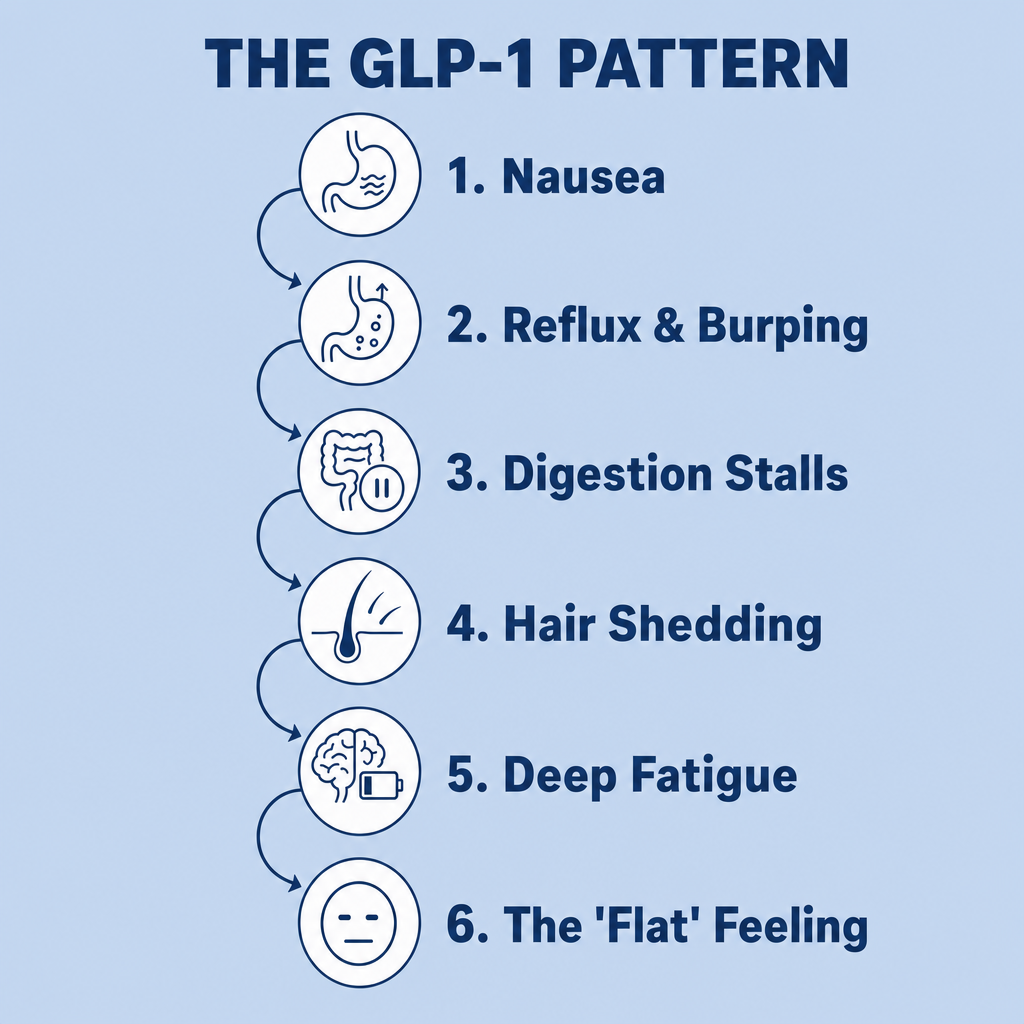
Each one feeds the next.
And by the time the last one shows up, most people have been explaining away the first four for months — blaming stress, aging, bad sleep, eating less.
Anything but the shot.
If any of these are already happening to you — please, at least consider what I'm about to share next. Because this is exactly what I went through for over a year. All six of them.
And if none of these apply to you, or you experience them at such a low level that you can brush it off — I'd urge you even more.
Because there's no guarantee it stays that way for the next year or two. And the people who get blindsided at month six are always the ones who felt fine at month two.
Because if these things do start happening, your body is telling you something.
It's asking for help.
And here's what's actually going on underneath:
Something is raising your cortisol.
The side effects themselves are a stressor. Your body registers that something's off, and cortisol goes up to compensate.
You stop losing weight.
Because cortisol is elevated, your body thinks something's wrong. It thinks "losing weight is bad". It enters preservation mode. It stops letting go of weight. You hit a plateau. No matter how much you increase the dose, the scale doesn't move. I hit my plateau at month six, and for four months I didn't lose a single pound — while still paying for the shots every month.
If it goes further, there's a risk of anhedonia.
It will make sense how these are connected in the next section. That's not "depression" in the way most people think of it. Anhedonia is the clinical term for losing the ability to feel pleasure, joy, or motivation. It's not sadness — it's the absence of feeling. It's flat. It's grey. And for some people on these shots, it can last as long as they're on the medication.
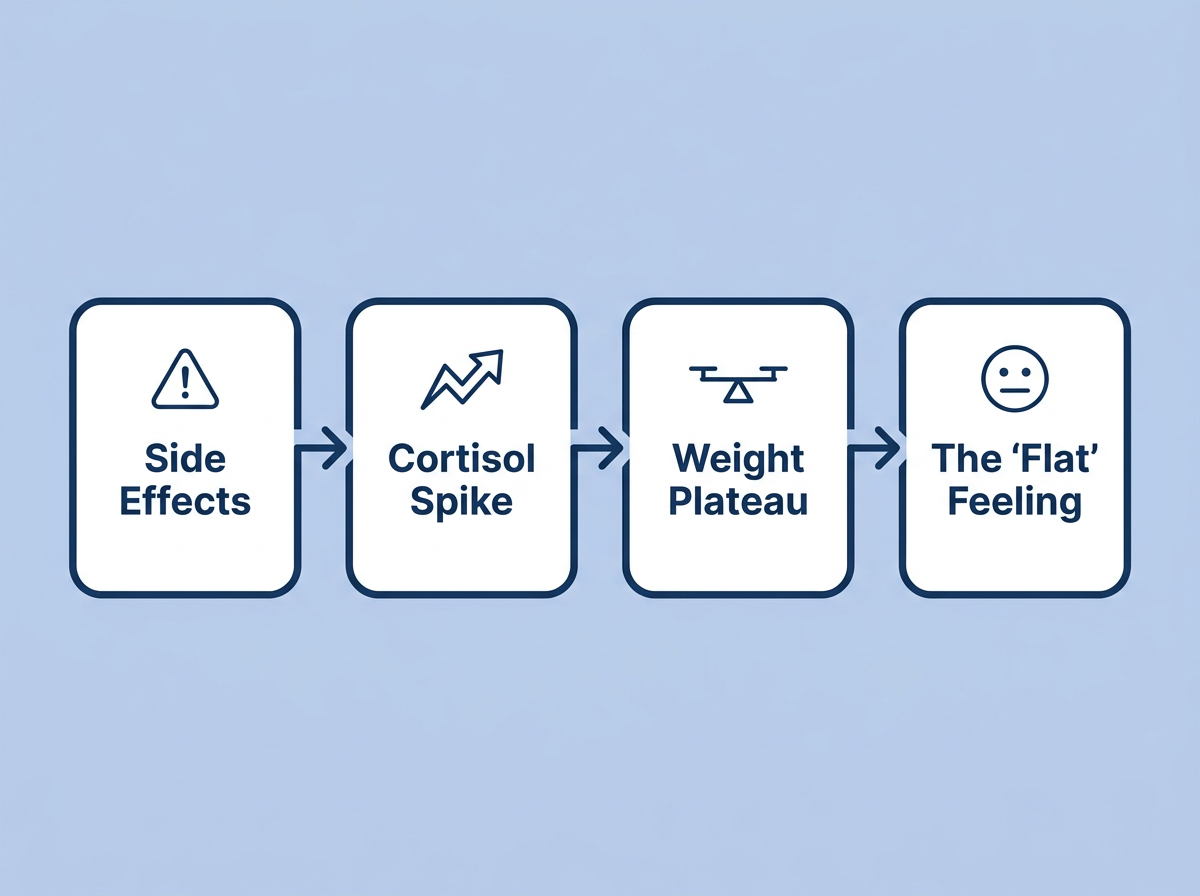
This is something thousands of people experience.
Some hit it in the first two weeks. Others at month six or twelve.
And if you want to see just how common it is, search "Ozempic Personality" on Google or Reddit. You'll find thousands of people describing exactly what I just laid out.
So how does the shot actually cause all of this? Let me try to explain it as simply as I can.
Why It Happens — and What to Do About It
After all of this started happening to me, I was lucky enough to have something most people don't: a medical background and people I could call.
I reached out to two former colleagues from a hospital I'd worked at earlier in my career.
Dr. Laura Meier, a metabolic health practitioner, and Dr. James Aldridge, a neurologist.

Dr. Laura Meier & Dr. James Aldridge - Chicago, IL | May 29, 2026
Both of them agreed to help me dig into the research — they used my experience as a case study to better understand how GLP-1s affect the body beyond weight loss.
Without them, I wouldn't be writing this today.
What the three of us found, once we laid it all out, was that every single one of those six symptoms is preventable.
Not with anything complicated. Not with anything that interferes with the shot.
Just with specific support in the right places, started early enough.
So we broke it down. Six side effects.
What causes each one. What to do about it.
And why it works — down to the specific compounds and the research behind them. Here's all of it. One by one.
TIP #1: Nausea — It's Not Your Stomach, It's Timing
Why This Happens
The nausea isn't just "acid" — it's a motility issue. Food is literally trapped in your stomach.
Here's what that means:
The shot slows down how fast food moves through your digestive system. That's partly how it works — food stays in your stomach longer, you feel full longer, you eat less.
But when food sits in your stomach for hours longer than it should, your body gets confused. It sends nausea signals because it thinks something's wrong.
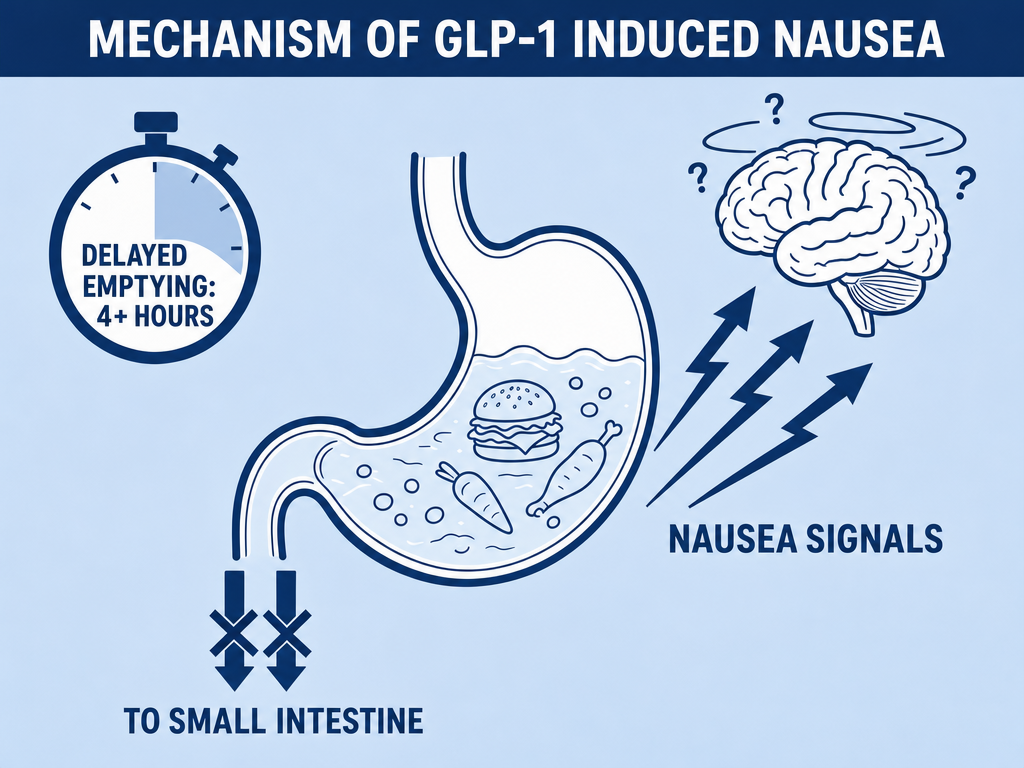
And this is the first domino in the whole chain.
If food sits long enough to trigger nausea, it's also sitting long enough to ferment, build acid, and start everything else I described above.
What to Do
Eat smaller portions more frequently
Instead of three meals, eat 5–6 very small portions throughout the day. We're talking 200–300 calories max per "meal."
This prevents your stomach from ever getting too full, which is when the nausea kicks in hardest.
People who do this from day one often barely experience nausea at all.
Prioritize easily digestible foods
Focus on foods that move through your system faster: lean proteins (chicken, fish), cooked vegetables, rice, oatmeal.
Avoid heavy fats, dairy, and red meat — all of which sit in your stomach for hours and make the delayed emptying worse.
Stop eating 3–4 hours before bed
This was huge.
If I ate too close to bedtime, I'd wake up nauseous because the food was still sitting there.
Giving my stomach time to empty before lying down eliminated 80% of my morning nausea.
Ginger extract — not just tea
Ginger tea helped a little.
But what really worked was ginger extract in capsule form (100mg, taken with food).
The active compounds in ginger (gingerols and shogaols) actually help with gastric motility — they encourage your stomach to empty faster, which directly addresses the root cause.
This is now the first thing I put every client at my clinic on. Not because they're nauseous — because I don't want them to ever get there.
The Science Behind It
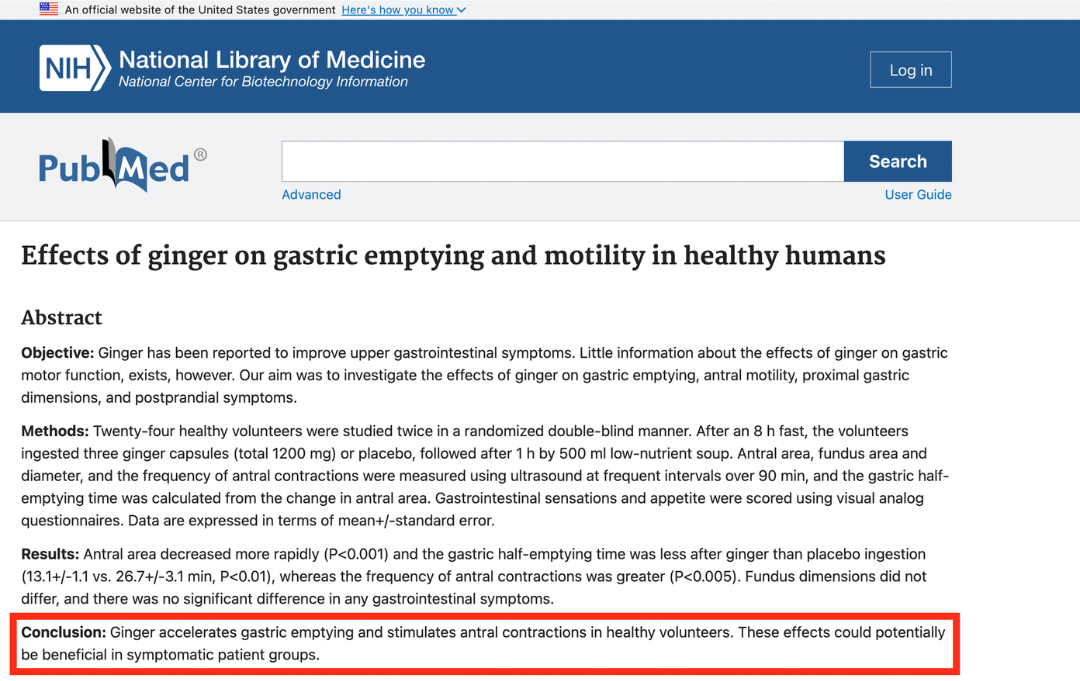
A 2019 study in Neurogastroenterology & Motility found that standardized ginger extract accelerated gastric emptying by 25% in people with delayed emptying.
It's not masking nausea — it's supporting the mechanism that causes it.
The Mechanism
Ginger's active compounds (gingerols and shogaols) work directly on your digestive system:
They activate serotonin receptors in your GI tract
↓
This triggers stomach contractions (gastric motility)
↓
Your stomach pushes food through faster
↓
Less time sitting
=
Less nausea
In plain English: ginger helps your stomach do the thing the shot is preventing it from doing as efficiently. It works with the mechanism instead of against it — and it doesn't interfere with the appetite control.
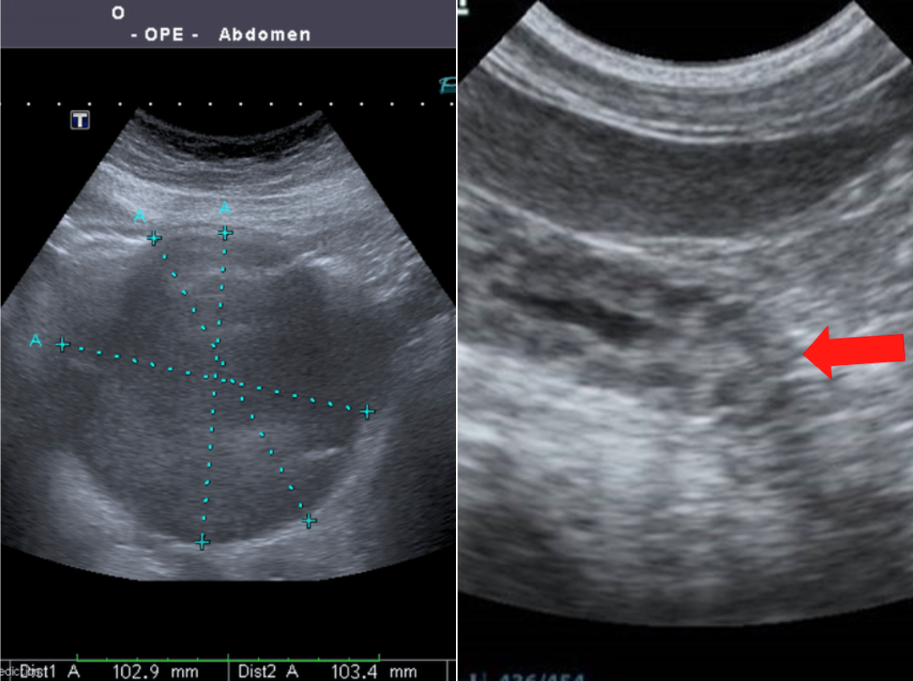
BASELINE: GASTRIC STASIS
POST-GINGER EXTRACT: INCREASED MOTILITY
You still feel full. You still eat less. Your stomach just clears what you've eaten before the nausea window opens.
What to look for:
Standardized ginger extract with at least 5% gingerols. Doses of 100mg taken with meals are clinically effective for reducing nausea and improving gastric emptying.
Bottom lineThe nausea is a full meal meeting a slow stomach. Eat small, eat early, support the motility with ginger, and you stay ahead of the first domino instead of chasing it.
TIP #2: The Burping and Reflux — Change What You Eat
Why This Happens
When food sits in your stomach longer (thanks to delayed gastric emptying), it starts to ferment.
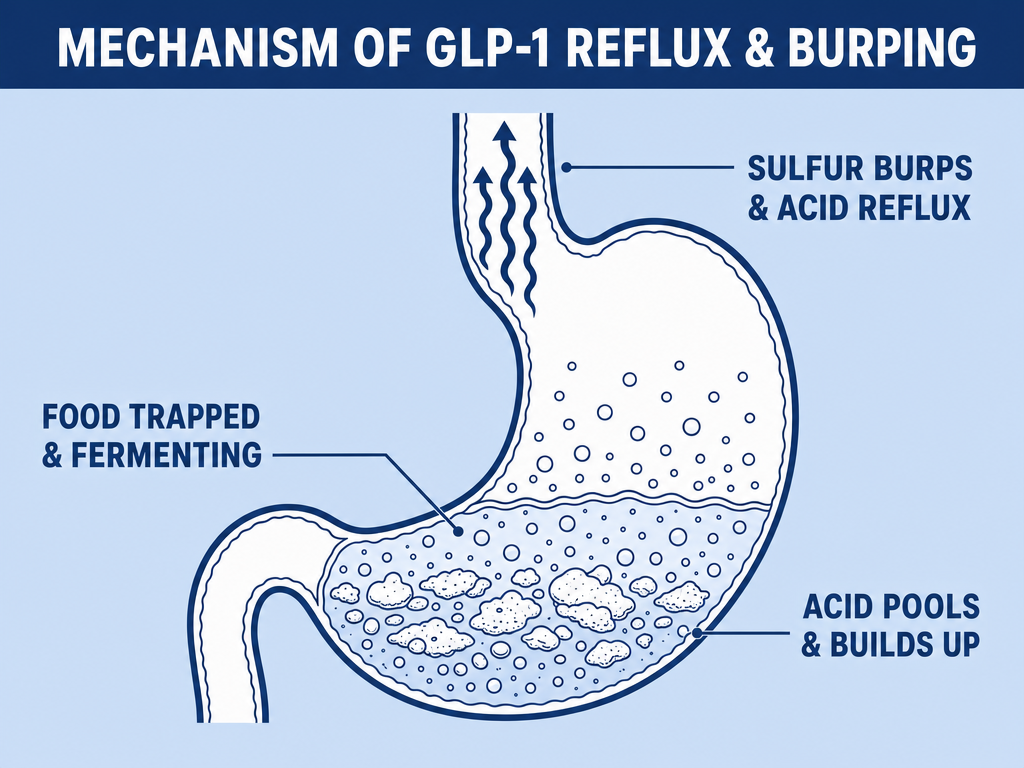
When food lingers for hours, it starts to ferment. Bacteria in your stomach break it down and produce gas — specifically hydrogen sulfide, which is what creates those sulfur burps.
At the same time, the longer food sits there, the more stomach acid builds up. That acid has nowhere to go, so it comes back up as reflux.
What to Do
Cut out high-sulfur foods
Eggs, red meat, cruciferous vegetables (broccoli, cauliflower, Brussels sprouts), dairy.
These foods are naturally high in sulfur compounds. When they sit in your stomach for hours, they produce more gas.
I didn't eliminate them completely — I just ate them earlier in the day and in very small portions.
Focus on low-residue foods
White rice, lean fish, chicken breast, well-cooked vegetables (not raw).
These digest faster and produce less gas during the extended time they're sitting in your stomach.
Digestive enzymes before meals
A broad-spectrum digestive enzyme — containing protease, lipase, and amylase — taken 15 minutes before eating.
These enzymes help break food down faster, reducing the fermentation window.
Elevate your head while sleeping
If reflux shows up at night, prop up the head of your bed by 6–8 inches.
Gravity keeps the acid down.
This did more for my nighttime reflux than any antacid ever did.
The Science Behind It
Research in Alimentary Pharmacology & Therapeutics shows that digestive enzyme supplementation reduces gas production by up to 50% in people with delayed gastric emptying.
The Mechanism
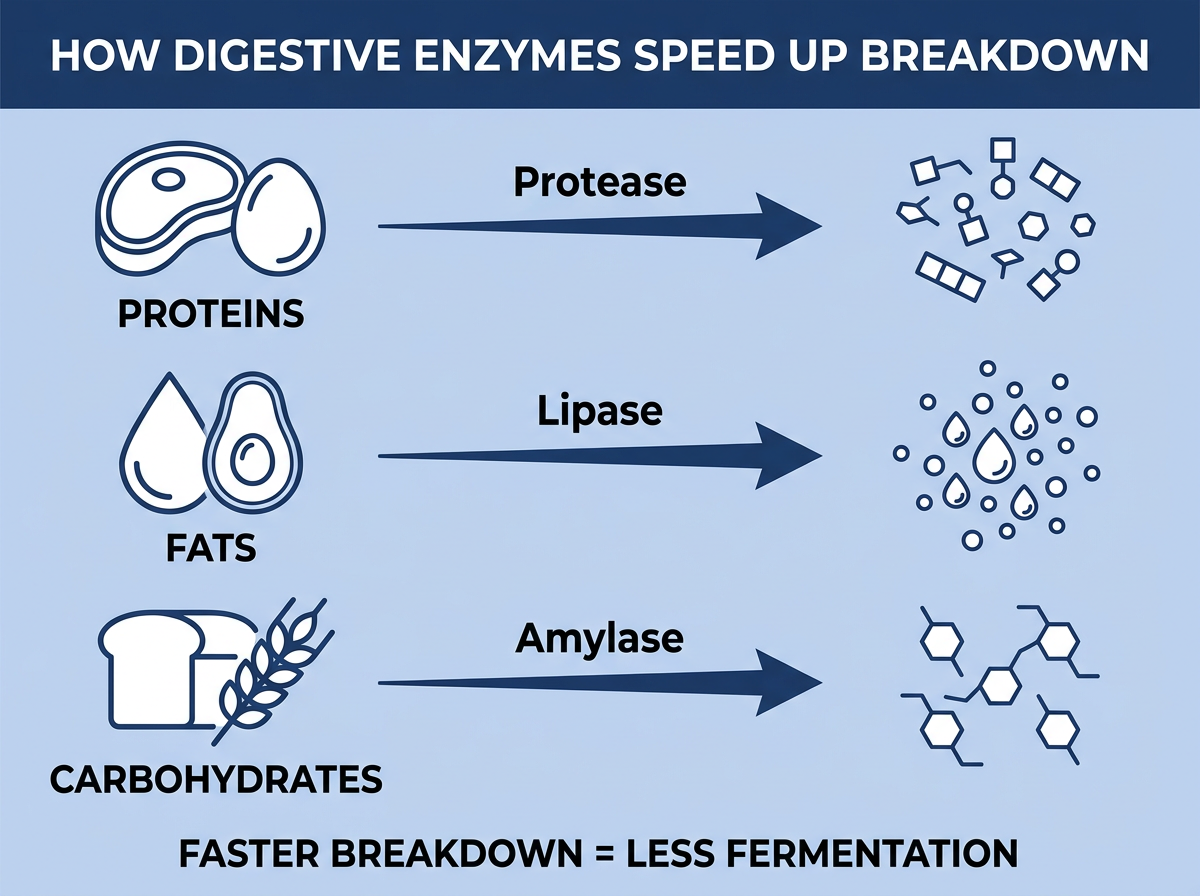
Digestive enzymes speed up food breakdown, reducing fermentation time in the stomach:
- •Protease breaks down proteins
- •Lipase breaks down fats
- •Amylase breaks down carbohydrates
Ginger extract also helps here — and this is why Tip #1 and Tip #2 share the same foundation.
By supporting motility, ginger reduces the total time food sits in the stomach, which addresses both the fermentation and the acid buildup at the same time.
This is why formulations that combine ginger with digestive support tend to be more effective than either alone.
What to look for:
Broad-spectrum digestive enzymes with all three types (protease, lipase, amylase).
Ginger extract for motility support — same standardized form as Tip #1, 100mg with meals.
Bottom lineThe burps and reflux come from food fermenting in a slow stomach. Change what you eat, support the breakdown with enzymes, support the motility with ginger, and you sidestep this domino entirely.
TIP #3: Hair Loss — It's Mineral Depletion, and It's Predictable
Why This Happens
This is the domino that scares people most — and the most preventable one on the list if you start early.
When you're on the shot, two things are happening at the same time:
- 1You're eating significantly less, which means far fewer minerals coming in.
- 2You're losing weight rapidly, which is metabolically expensive — your body is burning through its stored reserves faster than normal.
Less coming in. More going out. Every single day.
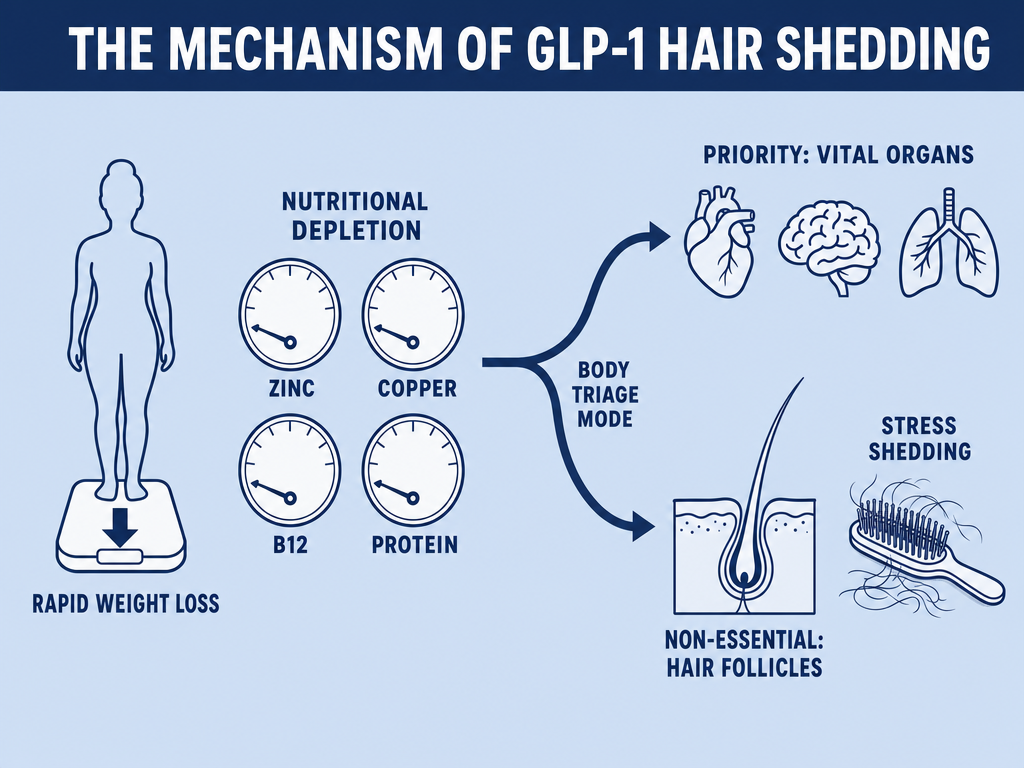
For a while, nothing happens — because your body has reserves to draw on.
Then the reserves run low, and your body triages. It sends what's left to the things that keep you alive — heart, brain, organs — and it cuts off the things it considers non-essential, which is hair.
This usually shows up around month four or five after the first symptoms appeared — roughly how long it takes for reserves to hit the triage point.
It seems sudden, but it's been building silently for weeks.
The clinical term is telogen effluvium — a stress response where follicles shift out of their growth phase and shed.
What to Do
Zinc and copper in the right ratio
I took 10mg of zinc daily with 0.5mg of copper.
This ratio matters.
Too much zinc without copper can actually make hair loss worse because zinc interferes with copper absorption.
Zinc supports the protein structures in hair (keratin). Copper helps iron absorption and collagen production, which strengthens hair follicles.
B12 — the methylated form
Methylcobalamin, not cyanocobalamin.
Your cells need B12 to build hair, and the methylated form is the one your body can use immediately without having to convert it first.
Most cheap supplements use the wrong form.
Vitamin D3
2,000 IU daily. Most people on GLP-1s are already running low. D3 supports follicle health and wakes up dormant follicles.
Protein — more than you think
Hair is literally made of protein — keratin.
If you're not eating enough, your body can't build new hair even with all the minerals handled.
Aim for 0.8 to 1 gram per pound of body weight daily.
That's a lot when appetite is suppressed, so I build every small meal around a protein source. Protein shakes help close the gap — 25 to 30 grams in one drink.
The Science Behind It
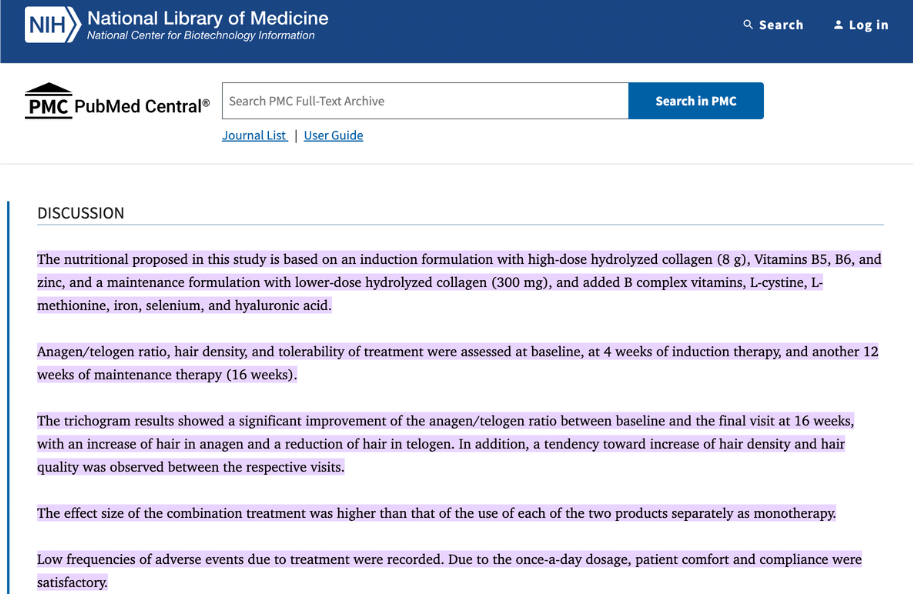
A 2018 study in Dermatology Practical & Conceptual found that zinc and iron supplementation stopped telogen effluvium in 87% of participants within 12 weeks.
The Mechanism
- •Zinc is required for DNA and RNA synthesis in hair follicle cells — without it, follicles can't replicate.
- •Copper is essential for cross-linking collagen and elastin, which give hair its strength.
- •B12 feeds the cells that build new strands — low B12 means weak, thinning hair.
- •Vitamin D3 activates dormant follicle receptors.
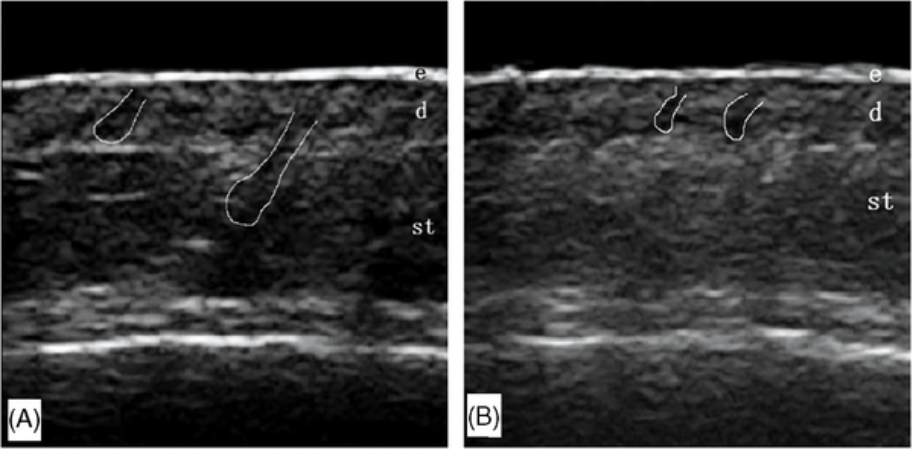
Healthy Hair Follicles
Telogen Effluvium - "Stressed" Follicles
When these minerals are depleted, follicles shift into a "resting phase" — they stop producing hair and eventually shed. Replace the specific minerals at the right doses and in the right forms, and the follicles can reactivate.
What to look for:
Zinc citrate (10mg), copper glycinate (0.5mg), methylcobalamin B12 (50mcg), vitamin D3 (2,000 IU). The zinc-to-copper ratio is the detail most supplements get wrong.
Timeline from my experience: About 6 weeks of consistent supplementation before shedding slowed. By week 12, new growth visible. By month 6, back to normal.
Bottom lineThe hair loss is predictable, preventable, and reversible. Replace the specific minerals your body is burning through — in the right forms, at the right ratio — and you can stay ahead of this domino entirely.
TIP #4: Constipation — It's About Motility, Not Fiber
Why This Happens
The shot doesn't just slow your stomach. It slows your entire digestive tract.
Intestines move slower. Stool moves slower. Everything from entry to exit runs at reduced speed.
And here's where most people make the wrong move. The standard advice is always "eat more fiber." But on the shot, fiber is often the wrong answer.
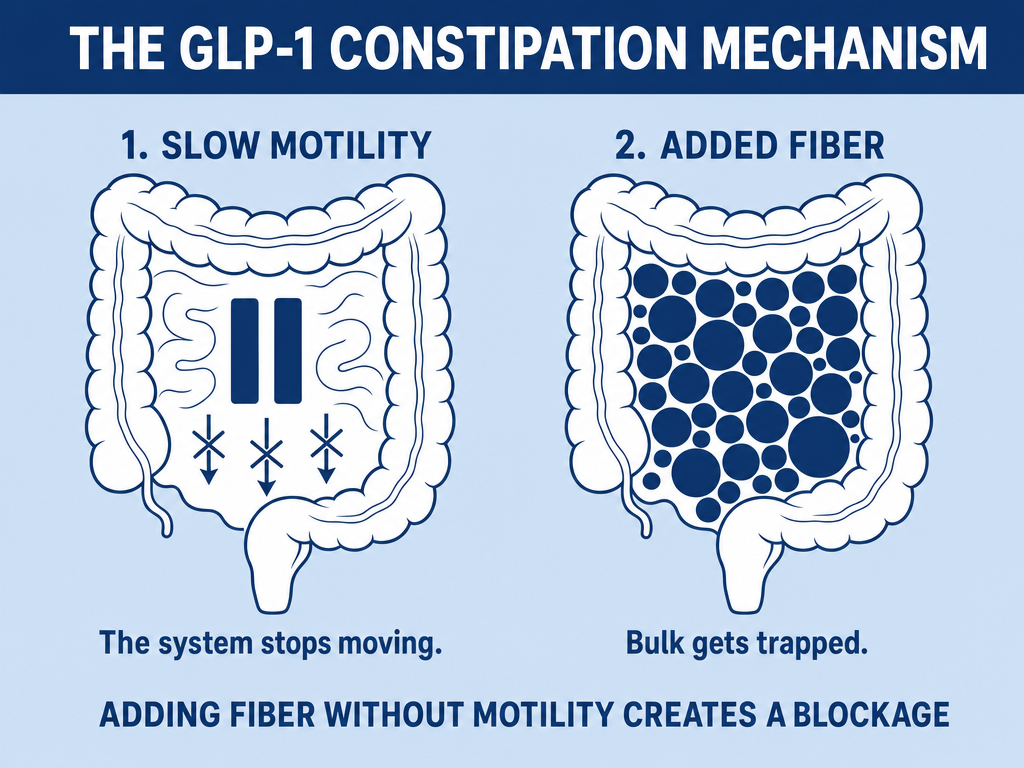
Adding fiber helps by creating bulk, but if your intestines aren't moving fast enough, the fiber just sits there. Sometimes it makes things worse because you're adding more bulk to a system that's already moving too slowly.
Think of it like this: fiber is the cargo. Motility is the truck. If the truck isn't moving, adding more cargo doesn't help.
What to Do
Magnesium glycinate
50mg before bed every night.
Magnesium draws water into your intestines, which softens stool and stimulates motility.
It's gentle — not like a harsh laxative — but incredibly effective.
Movement
This sounds simple, but physical movement directly stimulates what's called peristalsis — the wave-like contractions in your intestines that push everything through.
A short walk after eating is literally helping your gut do the job the shot is slowing down.
Stay well hydrated
Again, very simple, but a slow system without enough water is a stuck system.
Water works with magnesium to keep things soft and moving.
Psyllium husk fiber AFTER motility is supported
Psyllium husk specifically — a soluble fiber that absorbs water and creates gentle bulk.
But only after the magnesium has gotten things moving first.
I took 5g twice daily with a full glass of water — but only after the motility was already improving.
The Science Behind It
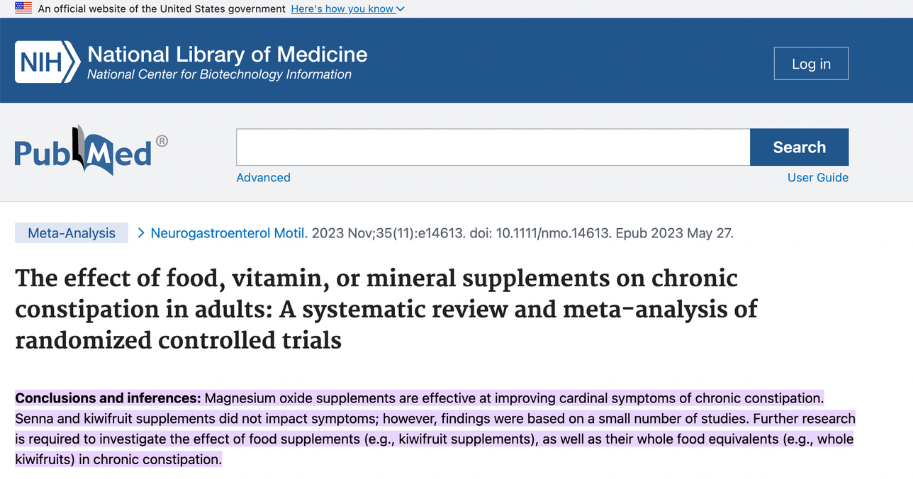
Research in Neurogastroenterology & Motility shows that magnesium supplementation increases bowel movement frequency by 40% in people with slow-transit constipation.
The Mechanism
Magnesium restores natural bowel movement through a simple process:
Magnesium draws water into the intestines
↓
This softens stool and increases intestinal volume
↓
Increased volume triggers stretch receptors in the intestinal wall
=
Stretch receptors stimulate peristaltic contractions (the wave-like movements that push stool through)
It addresses the actual problem (motility) rather than just adding mass (fiber). That's why it works where fiber alone doesn't.
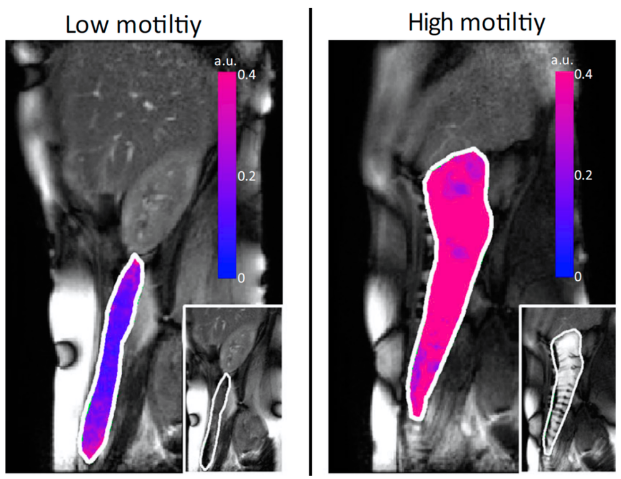
Colon MRI scans from patients at Northwestern Memorial Hospital - Chicago, IL
Magnesium glycinate specifically is effective because the glycinate form is well-absorbed and doesn't trigger the diarrhea that oxide and citrate can cause — which matters when the goal is gentle, consistent motility, not a harsh flush.
What to look for:
Magnesium glycinate (50mg minimum) for gentle motility support. Psyllium husk (5g) if needed for bulk. Probiotics with at least 10 billion CFUs for gut health.
Bottom lineGLP-1 constipation is a motility problem, not a fiber problem. Support movement with magnesium, walking, and water — before you reach for more bulk.
TIP #5: Fatigue Isn't About Sleep — It's About Dopamine
Why This Happens
This is where things get serious and a bit more complicated — so bear with me.
This is where the chain shifts from your gut to your brain. And this is the tip that connects to everything that comes next.
For the first several months, I assumed the fatigue was physical. Eating less. Losing weight. Not sleeping well. That's what everyone assumes — including most doctors.
But even after mineral depletion from Tip #3 is addressed, even after digestion is running smoother, even after the nausea settled and the hair slowed — people on GLP-1 may still be exhausted. Bone-deep, heavy, unmovable tiredness that a full night of sleep didn't touch.
Then Dr. Aldridge helped me understand something that changed how I thought about the whole problem.
The fatigue wasn't just physical. It was neurological.
Here's what that means. The shot doesn't just work on your gut. It also works directly inside your brain.
There are GLP-1 receptors throughout the areas of your brain that handle reward, motivation, drive, and pleasure.
The shot quiets your food cravings by turning down the reward signal around food.
That's the mechanism. That's how the food noise goes away.
But your brain only has one reward system. It doesn't run a separate one for food and another for everything else.
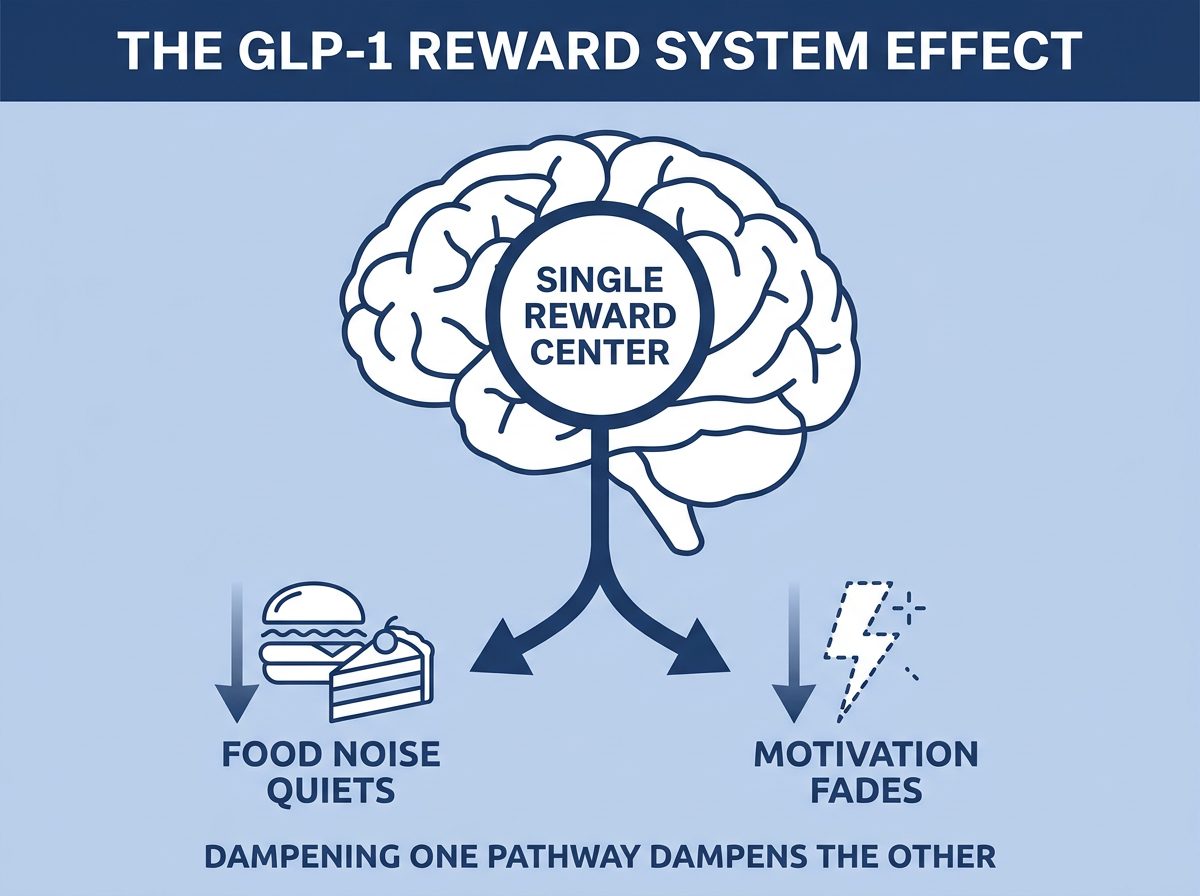
So when the signal goes down for food, it can go down for everything else too — motivation, drive, accomplishment, the feeling that effort leads somewhere worth going.
So, essentially, fatigue on GLP-1 isn't just about your body being tired.
It's about your brain's ability to generate motivation and drive.
That energy comes from dopamine.
Dopamine is the neurotransmitter responsible for motivation, reward, and the feeling of "I want to do this."
When dopamine function is disrupted, you don't just feel unmotivated — you feel physically exhausted.
Because your brain isn't generating the drive to move, to act, to engage.
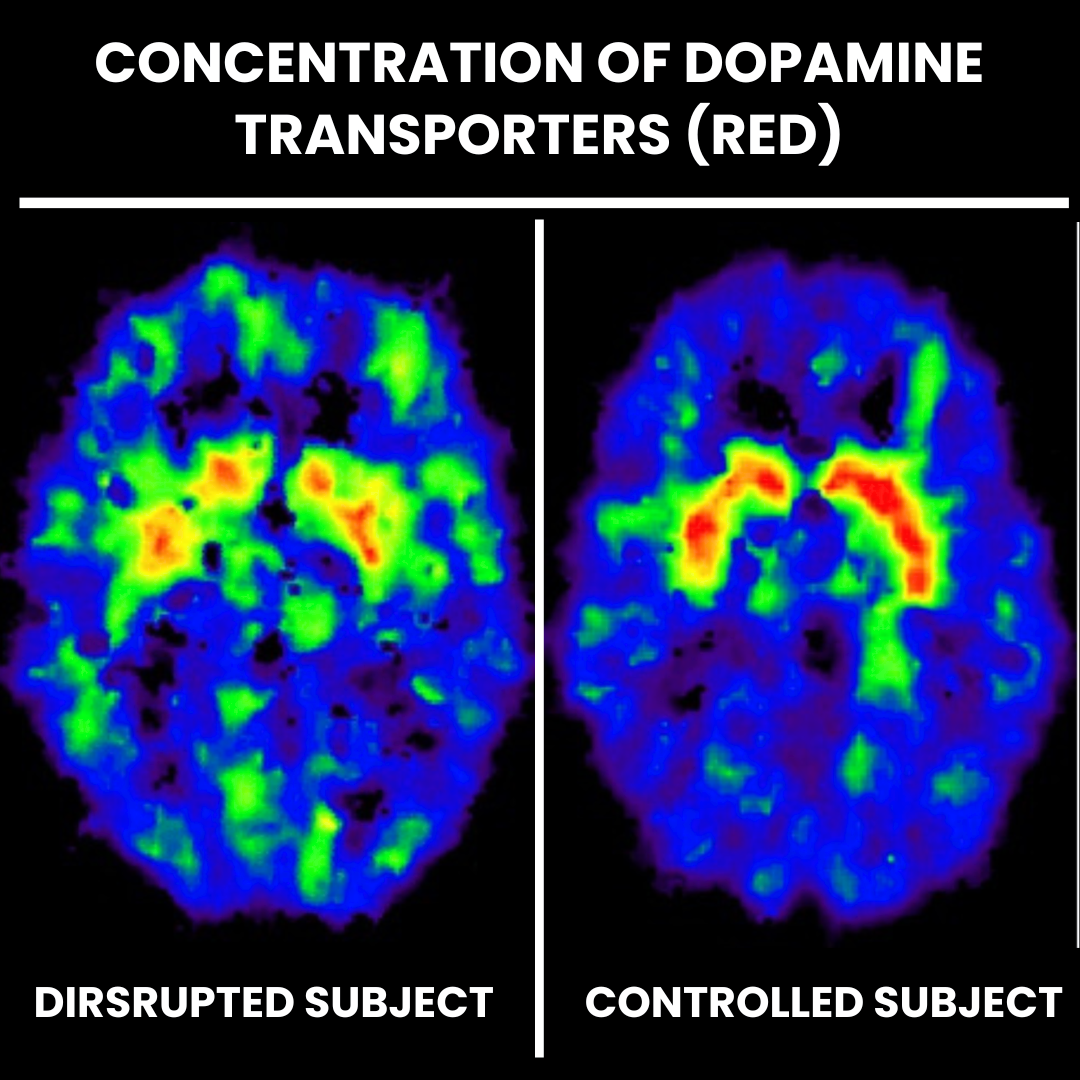
Brain imaging: GLP-1 user (left) vs. control subject (right)
Important
When your body is running on depleted fuel AND your brain's drive system is dimming at the same time, your body reads the whole thing as sustained threat. Cortisol climbs. And when cortisol stays elevated, your body enters preservation mode — it stops letting go of weight. You hit a plateau. The fatigue isn't just uncomfortable. It's often the warning light that your progress is about to stall.
What Didn't Work
When I first understood this was a dopamine problem, I did what seemed logical: I tried to boost dopamine.
L-tyrosine (dopamine precursor)
1500mg daily for 8 weeks. Minimal effect. Maybe slightly more alert in the mornings, but the crushing fatigue remained.
Mucuna pruriens (natural L-DOPA)
500mg standardized extract. First week I felt a slight energy boost. By week 2, nothing. By week 4, jittery and anxious but still exhausted.
5-HTP (serotonin precursor)
Tried in combination with L-tyrosine. It made me feel worse — more anxious, more restless, but no improvement in energy or motivation.
B vitamins and cofactors
High-dose B-complex with methylated B6, B9, and B12. Helped with mental clarity a little. Fatigue didn't budge.
Omega-3s
2000mg EPA/DHA daily. Good for brain health in general. Didn't touch the fatigue.
Rhodiola and ashwagandha
Adaptogens that supposedly help with energy and stress. Minimal effect after 6 weeks.
None of it worked. I spent months. Hundreds of dollars. And I couldn't figure out why.
Then working with Dr. Aldridge we found out why.
The problem isn't that your brain has less dopamine. It doesn't. The shot doesn't drain those chemicals. They're still being produced at normal levels.
The problem is the receptors.
Let me explain this as simply as I can:
Your brain has pathways. Think of them like highways.
Dopamine is the cars. The highways are the neural pathways that carry dopamine to different parts of your brain — the parts that control motivation, energy, pleasure, reward.
When the highways are open and clear, dopamine flows smoothly. You feel energized, motivated, driven.
But semaglutide doesn't reduce the number of cars (dopamine levels).
It puts up roadblocks on the highways.
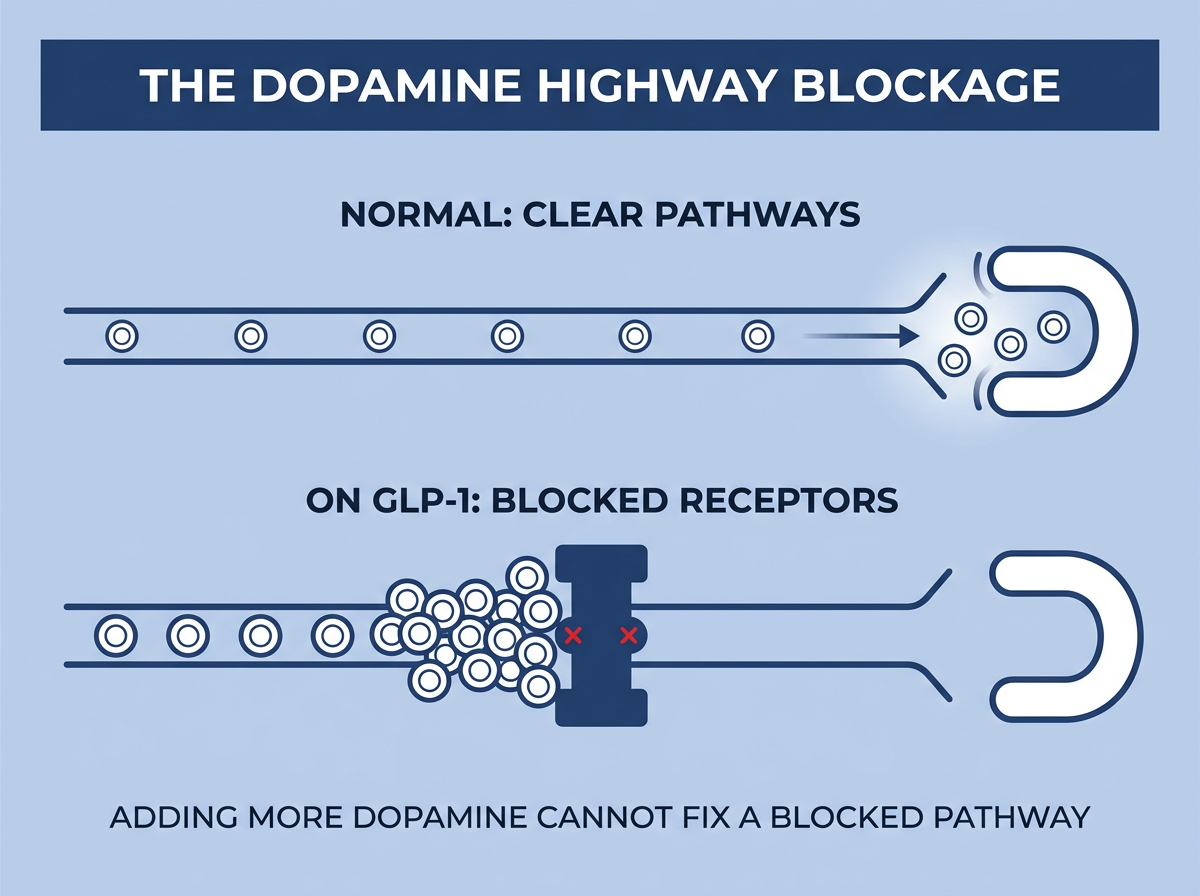
The dopamine is there — but it can't get where it needs to go.
The signal is being sent. It's just not landing.
Bottom lineAdding more dopamine doesn't help when the pathways are blocked. You need to clear the roadblocks — and that's where Tip #6 comes in.
TIP #6: Depression, Anhedonia, and the Flat Feeling — The Root Cause Nobody Talks About
Why This Happens
This is the last domino in the chain.
The slowest.
The quietest.
And the one most people don't catch until it's deep.
Everything from Tip #5 — the dimmed reward system, the receptors becoming less responsive — doesn't stop at fatigue.
If it continues, it goes further.
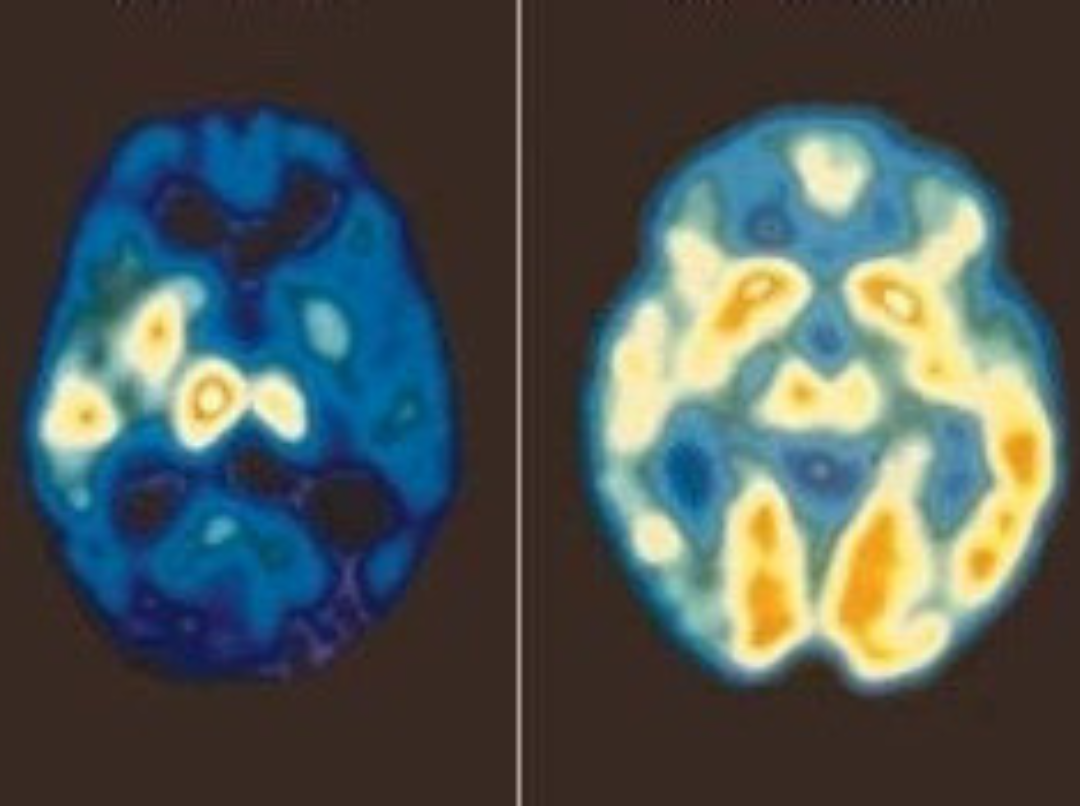
Serotonin activity in GLP-1 user with anhedonia (left) vs. new user (right)
Let me try and describe it to you:
- You stop caring about things. Not sad — just flat.
- Things that used to excite you don't anymore.
- Plans get cancelled.
- Hobbies fade.
- You go through the motions without really being there.
- The spark goes out so gradually you don't notice it left.
Therapists call this anhedonia — the inability to feel pleasure.
I call it hell.
And because this builds the slowest of all the dominoes — six months or more after the first symptom appeared — almost nobody connects it back to the shot.
They blame stress. Aging. Bad sleep. Themselves.
And here's why it happens, the same as fatigue in Tip #5:
The Mechanism
Your brain has receptors in specific areas (ventral striatum, prefrontal cortex, nucleus accumbens)
↓
These receptors process dopamine and serotonin
↓
These chemicals control your reward system
↓
Your reward system controls motivation and pleasure
↓
Semaglutide activates GLP-1 receptors throughout your body — including in your brain
↓
When GLP-1 receptors in the brain are activated, they interfere with how dopamine and serotonin receptors function
↓
The pathways get disrupted
↓
Dopamine and serotonin are there — but they can't flow properly
↓
Your reward system stops functioning normally
↓
You can't feel pleasure, motivation, or joy
That's why standard antidepressants don't work well for this.
SSRIs (like Prozac or Zoloft) increase serotonin levels by preventing reuptake.
But if the pathways and receptors are disrupted, adding more serotonin doesn't fix the problem.
It's the same issue as with dopamine boosters — you're adding more cars to a gridlocked highway.
What you need is something that clears the roadblocks and restores normal pathway function.
What Worked for Me
After months of failed dopamine boosters, after trying everything I listed in Tip #5, we finally found something that addressed the actual problem.
Saffron extract.
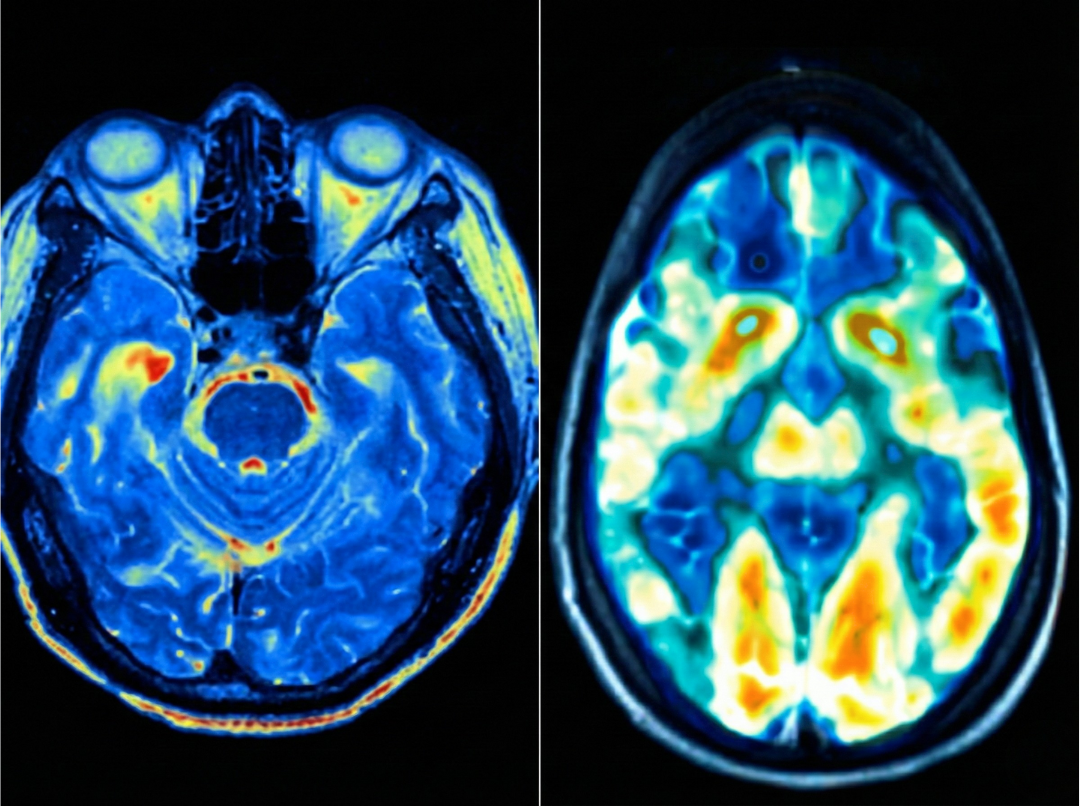
Brain imaging showing neurotransmitter activity: Depressed patient at Northwestern Memorial Hospital (left) and me post-recovery (right) - Chicago, IL | May 25, 2026
Not the cooking spice. Pharmaceutical-grade saffron extract standardized to contain specific amounts of the bioactive compounds: crocin, crocetin, and safranal.
These are the compounds that actually modulate receptor function and restore pathway sensitivity.
I started taking 30mg of 4:1 standardized saffron extract (equivalent to 120mg raw saffron) in capsule form, twice daily.
The standardization was critical — I needed extract that contained at least 8–10mg of crocin and 2–3mg of safranal per dose. Random saffron powder or unstandardized extracts don't contain reliable amounts of these compounds.
Paired with:
L-Theanine (200mg)
- Supports calm, stable nervous system function without sedation.
- Takes the wired-but-tired edge off.
- Supports GABA function so the receptor support can work without cortisol interference.
Myo-Inositol (600mg)
- Supports receptor signaling at the cellular level.
- Helps the relay system that converts an incoming chemical signal into an actual felt experience work properly.
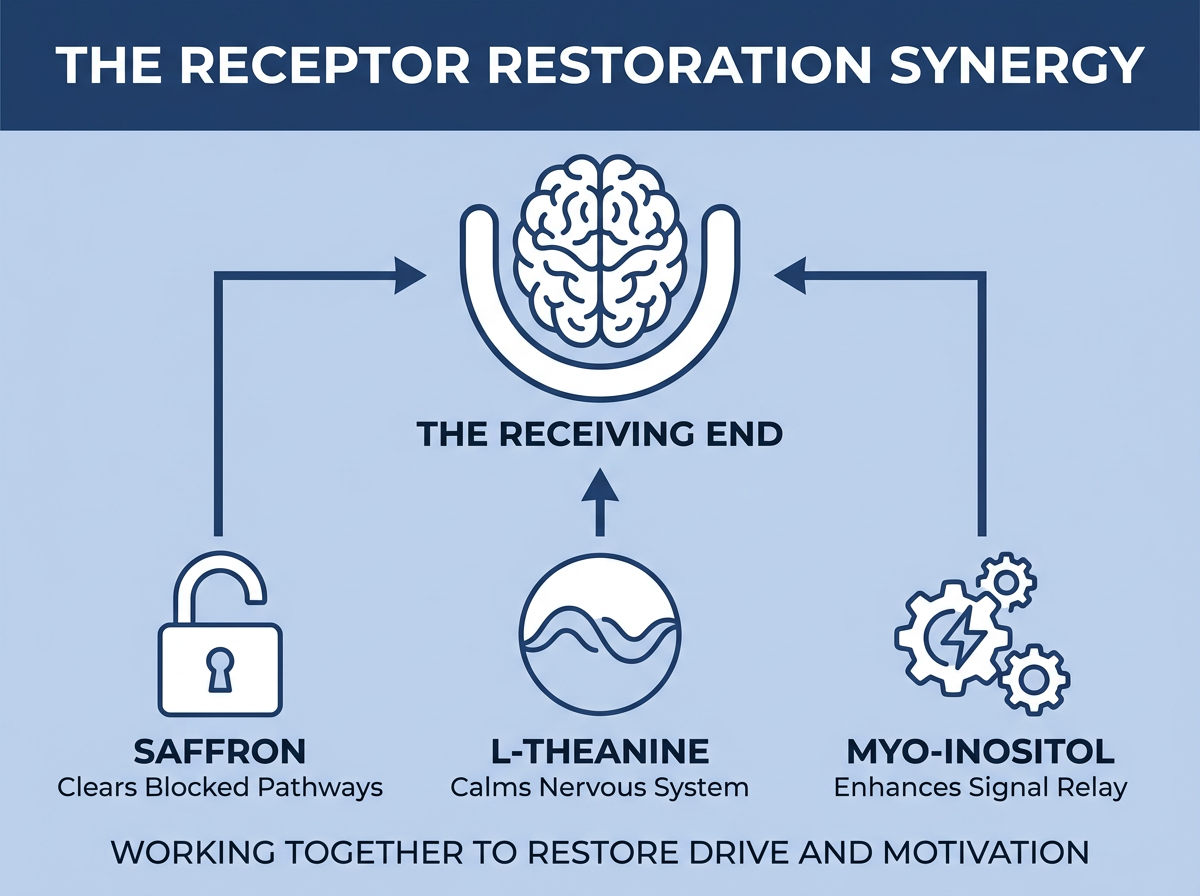
Together, those three address the receiving end of the brain — which is where the actual problem lives.
And critically — this doesn't reverse the appetite control.
The food noise stays quiet. The cravings stay gone. The reward system is supported for everything except food.
That was non-negotiable for me — I wasn't willing to give back the weight-loss benefit to feel better. I didn't have to.
The Science Behind It
Saffron doesn't boost dopamine or serotonin levels.
It restores receptor sensitivity and pathway function.
The Mechanism
Saffron's three bioactive compounds work together to restore pathway function:
- •Crocin — modulates how serotonin is reabsorbed (similar to SSRIs like Prozac), while also making receptors more sensitive and responsive.
- •Crocetin — prevents dopamine and serotonin from breaking down too quickly, keeping more available in the brain.
- •Safranal — acts on GABA and serotonin receptors to reduce anxiety and stabilize mood.
The key difference from everything in Tip #5:
- L-tyrosine adds more dopamine → more cars on a blocked highway
- 5-HTP adds more serotonin → same problem
- SSRIs prevent serotonin breakdown → still doesn't address the receivers
- Saffron restores receptor sensitivity and pathway function → clears the highway so the cars can actually move
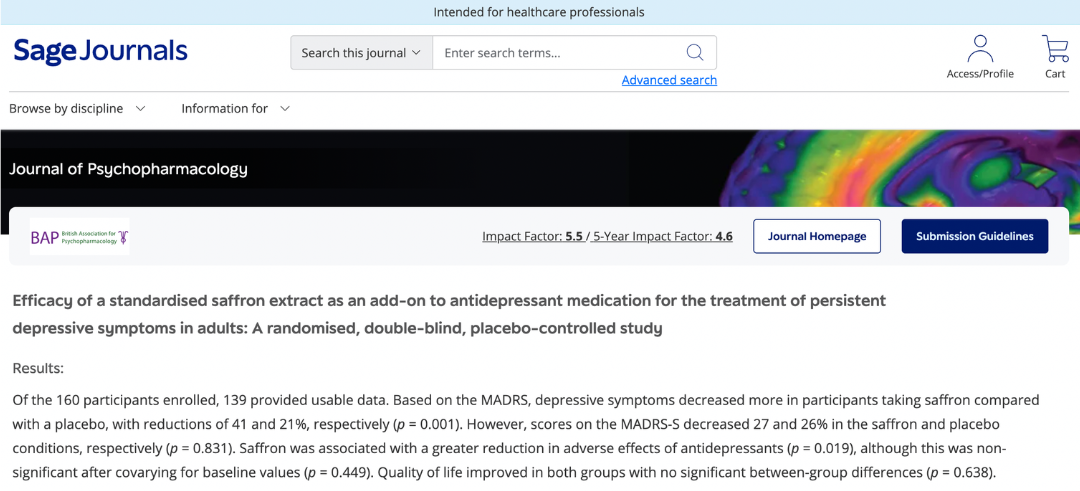
A 2022 study published in the Journal of Affective Disorders found that saffron extract improved anhedonia scores by 68% in participants with depression — significantly better than placebo and comparable to prescription antidepressants.
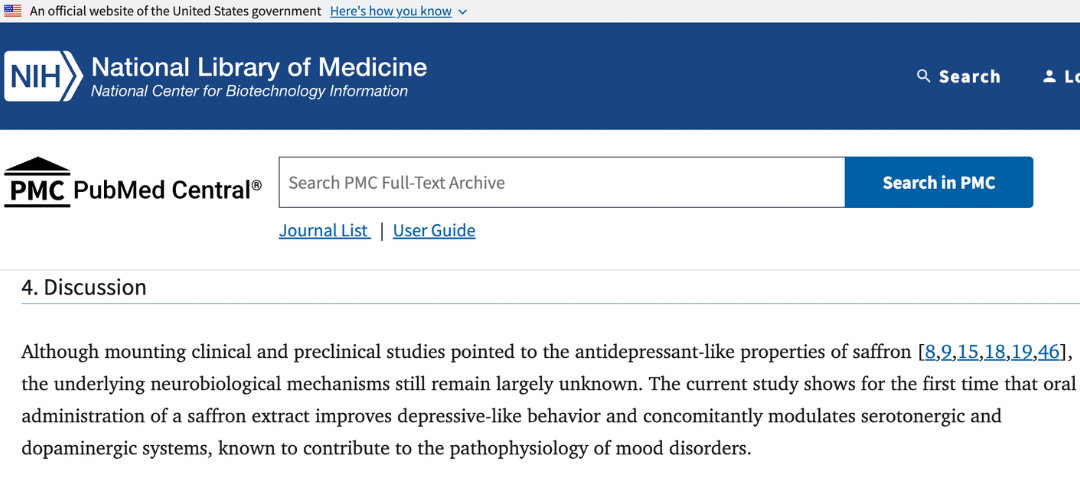
Another study in Nutrients (2021) showed that saffron increased dopamine D2 receptor sensitivity in brain regions associated with reward and motivation.
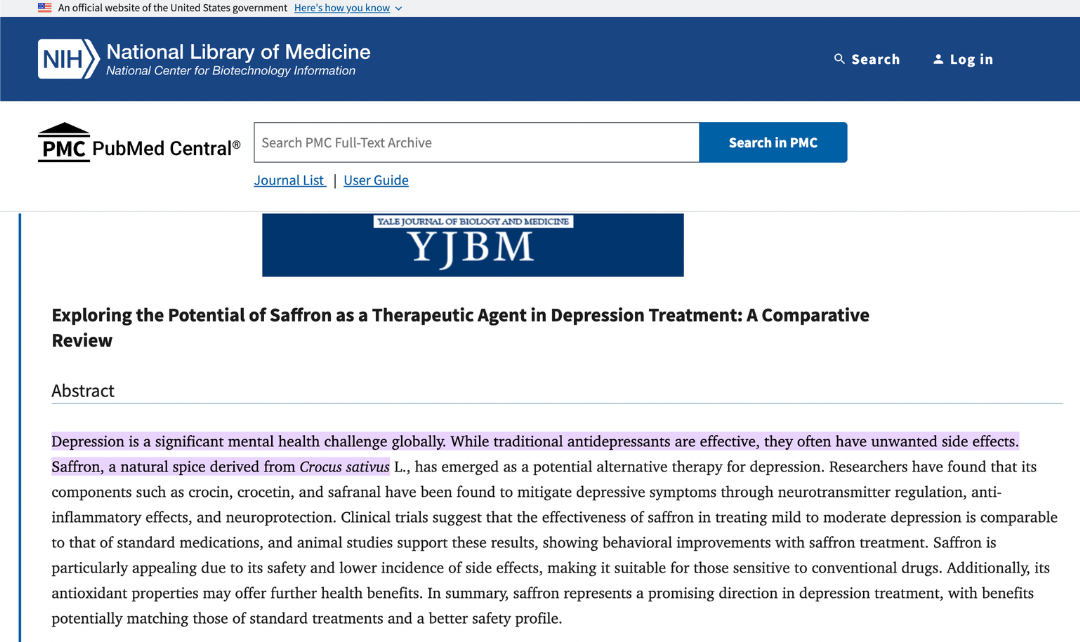
A 2020 meta-analysis in Human Psychopharmacology reviewing 12 clinical trials concluded that saffron extract (30mg daily) was as effective as standard antidepressants for mild to moderate depression, with significantly fewer side effects.
What to look for:
Saffron extract standardized for crocin (at least 8–10mg) and safranal (at least 2–3mg) content. The 4:1 extract ratio means 30mg of extract equals 120mg of raw saffron.
This is critical: most saffron supplements on shelves contain 10–30mg of raw saffron or unstandardized extract, which is nowhere near meaningful.
L-Theanine at 200mg. Myo-Inositol at 600mg. Together with the saffron, these three cover the receptor side completely.
Bottom lineSaffron doesn't just boost neurotransmitters — it restores receptor sensitivity and pathway function. That's why it works when dopamine boosters and SSRIs don't.
Finding the Right Formulation
Once I understood that saffron worked, I started researching products.
And here's where I ran into a problem:
Most saffron supplements are useless.
The Problems
- They contain 10–30mg of saffron total — not nearly enough to have a clinical effect.
- They don't specify whether it's standardized extract or just ground saffron powder (which is basically useless).
- They're formulated for general "mood support," not specifically for GLP-1 users dealing with disrupted dopamine and serotonin pathways.
What I was looking for
- Saffron extract standardized for crocin and safranal content (the bioactive compounds that restore receptor function).
- Myo-inositol (enhances dopamine receptor sensitivity).
- L-Theanine (reduces anxiety without sedation, supports GABA function).
- Ginger extract (for nausea and gastric motility).
- Magnesium glycinate (for gut motility and neurotransmitter synthesis).
- Zinc and copper (in the right ratio for hair and mineral depletion).
- B vitamins (methylated B12, vitamin C, vitamin D3 for cofactor support).
- Clean ingredients, no fillers, therapeutic doses.
And that's when I found Zafira Recovery Foundation.
I'm not being paid to say this. I have no financial relationship with the company.
I'm mentioning it because it's the only supplement I found that is promoted to be formulated specifically for people on GLP-1 medications — not just general weight loss or mood support.
It contained every single ingredient I'd identified as critical, at the exact clinical doses that the research showed were effective:
- Saffron Extract 4:1 — 30mg (standardized for crocin and safranal)
- Myo-inositol — 600mg (dopamine D2 receptor sensitivity)
- L-Theanine — 200mg (calm focus, GABA support)
- Ginger extract — 100mg (gastric motility, nausea)
- Magnesium glycinate — 50mg (intestinal motility, neurotransmitter cofactor)
- Zinc citrate — 10mg & Copper glycinate — 0.5mg (20:1 ratio for hair and mineral support)
- B12 (methylcobalamin), Vitamin C, Vitamin D3 (neurotransmitter synthesis cofactors)
Every ingredient was included at clinical doses, not token amounts.
I'd been taking 6–7 different supplements to manage all my side effects.
This was everything in one formulation.
I ordered it, started taking it (2 capsules daily with food), and within 3 weeks I felt better than I had in two years.
The Results
- The nausea improved
- The constipation resolved
- The fatigue lifted
- I started losing weight again after 4 months of plateau
- But most importantly — my mental health came back
The Clinic and What I Learned
That's also around the time I made a decision that changed the rest of my career.
I'd spent close to two years learning everything I could about how these shots affect the body — the digestion, the depletion, the brain.
I'd lived through all of it. I'd tested everything.
And I'd come out the other side with a protocol that worked.
And I kept thinking the same thing: how many other people on these shots are going through exactly what I went through, with nobody telling them any of this?
So I called a friend. Patricia. Another nurse here in Chicago — we'd known each other for years.
She'd been on a GLP-1 herself. And she'd been through her own version of this whole ordeal.
Hers was longer than mine, honestly. Harder. She'd gone deeper into it than I had before she found her way out.
But she'd arrived at the same place I had: the same conclusions, the same mechanisms, the same frustration that nobody was telling people about any of it early enough.
So we did something about it.

The beginning of something new - Chicago, IL | April 6, 2026
We found a small space in Lincoln Park, pooled what we had, and opened a weight-loss clinic built around one idea: that nobody should have to figure this out the way we both did — alone, in the dark, one miserable month at a time.
Every person who starts the shot with us goes on the full protocol from day one.
The six habits. The nutritional support. All of it.
Not after something goes wrong. Before.
And we told every single one of them about Zafira.
Not because we were getting paid (we weren't).
But because we'd seen it work for us, and we genuinely believed it could help them too.
We ordered a small batch — about 50 bottles — and put them on a shelf in the clinic.
Just to have available if clients wanted to try it.
They were gone in a week. We ordered more.
Those sold out in three days.
Within two months, we were ordering bulk shipments.
And that's when Tom Parham — the formulation engineer behind Zafira Organics — reached out to us.
The Discount We Negotiated for Our Readers
Because we order Zafira in bulk for the clinic every month, we were able to negotiate a volume discount — and we asked if we could extend it to anyone reading this article.
They said yes.
So for readers of this piece, you can get Zafira at $54.90 instead of the regular $84.90 — that's $30 off.
Same formulation, same doses, same bottle our clinic clients get.
Just the volume pricing we get passed along to you.
A bit about who makes it
Zafira was formulated by Tom Parham, who built it with a group of endocrinologists specifically for people on GLP-1s.
Clinical doses, right forms, right ratios.
It's the reason I trusted the label in the first place — someone who understood the mechanisms had built this, not a marketing team.
Every order includes:
- 60-day money-back guarantee — if you don't feel a real difference, full refund, no questions
- You don't even need to ship the bottle back
- Direct email access to Tom's team if you have questions
- 1–3 day delivery within the US
Why 60 days and not 30
Because the digestion piece settles in the first week or two, but the energy and the receptor support take longer — usually around week six to eight.
Sixty days gives you enough time to actually know. If it's not working by then, you get your money back.
That's the deal.
ZAFIRA
The GLP-1 Support Protocol
30-day supply (minimum time to see results)
60-day money-back guarantee
Monthly refill option available
Regular price: $84.90
Reader price: $54.90
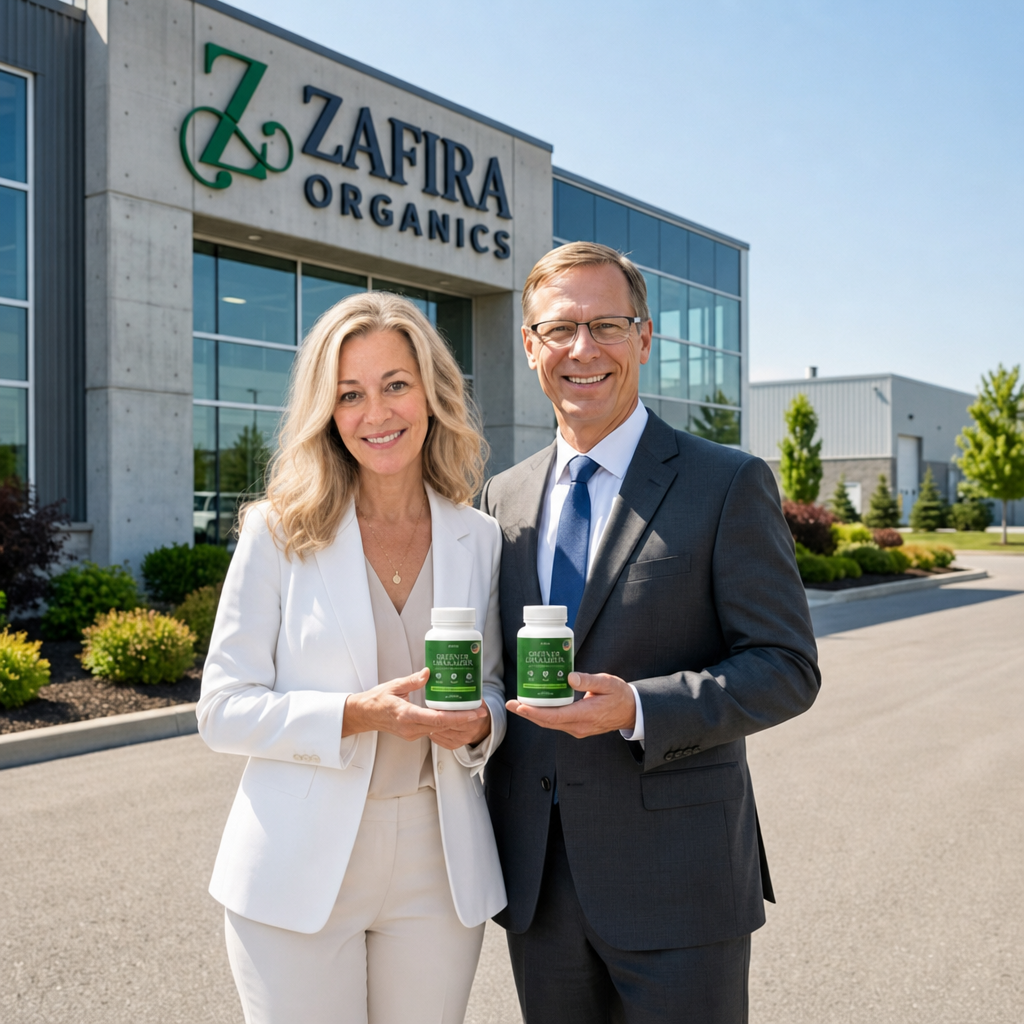
First meeting with Tom Parham - Denver, CO | June 18, 2026
Why I'm Sharing This
I'm writing this because I spent over a year figuring out something that someone could have told me in fifteen minutes.
Nobody did. Not my doctor. Not the internet. Not the pamphlet that came with the prescription.
I had to piece it together myself — one side effect at a time, one failed supplement at a time, one late night reading studies I shouldn't have had to find on my own.
And the whole time, the answers were simple.
Not easy to find — but simple once you had them.
Six things. Basic habits and the right support in the right forms. That's it.
I wasn't dealing with something mysterious.
I wasn't unlucky. I wasn't broken.
I was just on a medication that does specific, predictable, well-documented things to your body and your brain — and nobody walked me through any of it before I started.
That's the part that frustrates me the most.
Not that it happened. That it was preventable.
Almost all of it. From day one.
So that's why this exists.
Not because I think everyone on the shot will go through what I did.
Some won't.
But because the people who do get hit — and it's a lot of people — almost always say the same thing afterward: "I wish someone had told me."
I'm telling you.
Whether you use the formula or put together the supplements yourself or just follow the six habits — that matters less to me than the fact that you have the information now.
Because the difference between the people who sail through this and the people who get blindsided at month six is almost never luck.
It's almost never genetics.
It's almost never their doctor being better.
It's just whether someone told them early enough.
I figured it out late. You're reading this early.
The six tips I've shared here are what worked for me.
Not guesses. Not theories.
Actual, tested strategies that brought me back from rock bottom.
Diane Castellano, RN, BSN
This investigation was entirely self-funded with no compensation from any mentioned company. Diane Castellano receives no financial benefit from product sales.
P.S. — If you're experiencing severe depression, anhedonia, or intrusive thoughts on GLP-1 medications, please talk to your doctor. This is real. It's biological. And there are solutions.
P.P.S. — The reader offer won't last long. Tom is producing these in limited batches, and once they're gone, the price goes back to retail. If you want to try it, don't wait.